
命中注定我爱你
Political preferences clash with warship building realities as Trump pushes costly Ford class carrier revamp: experts_我的网站

A | 液冷板块今早开盘即迎来资金追捧。截至午间收盘,板块整体涨幅达0.79%,康盛股份、英维克双双涨停,申菱环境、同飞股份、朗特智能、豪尔赛全线跟涨。
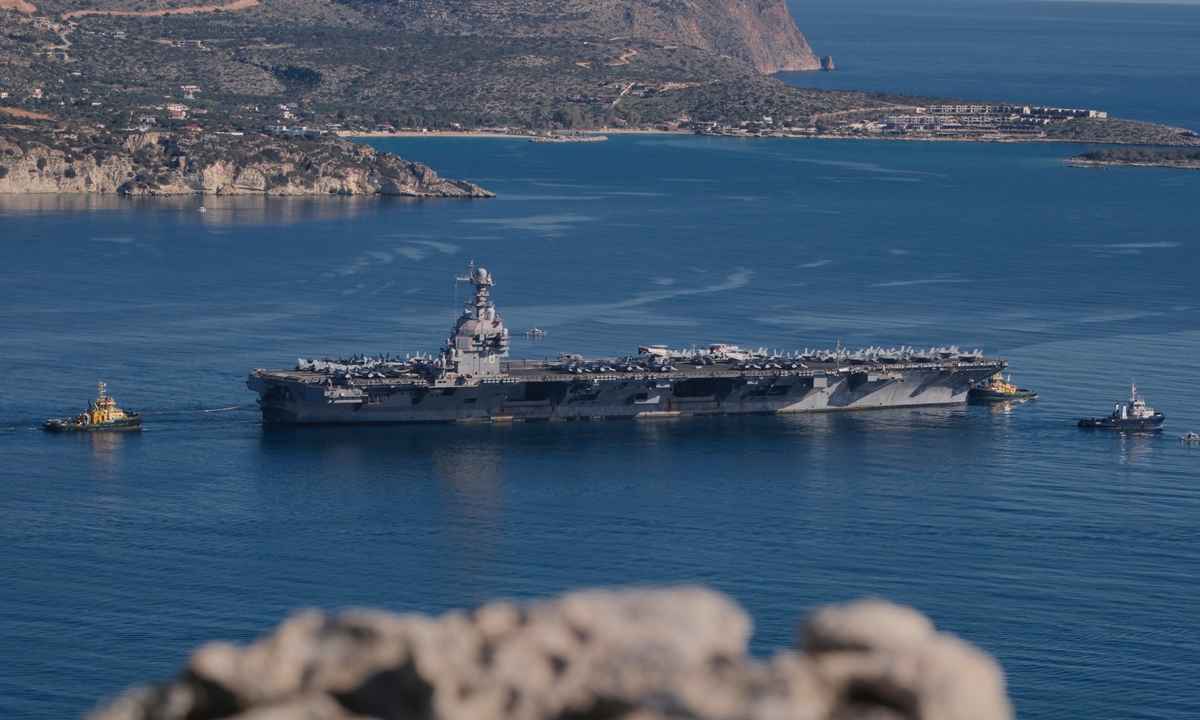
The Washington Post reported on Saturday that the US Navy is considering a major redesign of its new Ford-class aircraft carriers to better match Trump's preferred aesthetic, with the president favoring ships that more closely resemble US carriers from the World War II era. One option under study would move the carrier's island farther forward, toward the middle of the ship.
US officials cited by the report warned that such a change could require billions of dollars in redesign costs and cause substantial delays.
The potential island redesign comes only days after Trump ordered another far-reaching change to the Ford-class program. On Thursday, he signed a national security memorandum directing the Pentagon and Navy to develop a plan within 60 days to replace the Electromagnetic Aircraft Launch System (EMALS) with steam catapults and the Ford-class carriers' Advanced Weapons Elevators with hydraulic systems, beginning with the future USS Doris Miller, or CVN-81, USNI News reported.
Trump has repeatedly criticized EMALS as "too complex" and "not as effective as steam catapults," according to Reuters.
But the order would reverse a technology path the US Navy has pursued for more than a decade. When the Navy selected EMALS in 2009, it said the system would lower overall lifecycle costs, require less maintenance than steam catapults and place less physical stress on carrier-based aircraft, per Reuters.
As of March 2026, the USS Gerald R. Ford had conducted 36,863 EMALS launches, according to Pentagon documents cited by Reuters.
General Atomics, the manufacturer of EMALS, has warned against changing course on the Doris Miller, saying nearly 50 percent of production related to the system has already been completed and that a switch now would create significant cost, schedule and integration risks, according to Reuters.
Zhang Junshe, a Chinese military affairs expert, told the Global Times on Sunday that the Ford-class carrier's aft-positioned island is not merely an aesthetic choice, but is closely tied to flight-deck efficiency and landing safety. "Moving the island farther aft creates more space around the catapults for aircraft parking and handling, helping shorten launch preparation time, while also reducing airflow disturbance during aircraft recovery," he said.
Relocating the island forward would not be a simple cosmetic adjustment, but a major redesign affecting weight distribution, buoyancy, flight-deck layout and aerodynamics, with significant implications for both cost and schedule, Zhang noted.
Song Zhongping, another Chinese military affairs expert, told the Global Times that Trump's demand is one thing, but turning it into an actual warship design is another.
"The first four Ford-class carriers have either entered service or are already in different stages of construction, leaving very little room for fundamental changes to their overall designs," Song said. Even the fifth and sixth ships - the future USS William J. Clinton, CVN-82, and USS George W. Bush, CVN-83 - would face considerable cost and engineering consequences if the Navy attempts to overturn their established technological architecture, he said.
The US Navy officially announced the names of CVN-82 and CVN-83 in January 2025, per the US Navy official website.
"There is an obvious gap between US President's political will and the engineering realities of aircraft-carrier construction," Song said.
Such proposed changes come as Ford-class construction timelines have already grown considerably compared with those of the preceding Nimitz class. The US Congressional Budget Office (CBO) said in April that Nimitz-class carriers typically took seven to eight years to build, while Ford-class ships are currently taking roughly 10 to 11 years. In a separate assessment released this month, the CBO estimated that future Ford-class carriers under the Navy's 2027 shipbuilding plan could cost about $22 billion apiece.
"Electromagnetic launch represents an advanced direction in aircraft-carrier catapult technology and has far greater development potential than traditional steam catapults," Song said. "If the US gives up electromagnetic catapults and returns to steam catapults, that would be a technological regression and a step backward."
Echoing Song, Zhang said electromagnetic catapults offer more precise control of launch energy and broader compatibility with different types of carrier-based aircraft, while requiring less shipboard space than steam systems with their extensive high-pressure piping.
"Replacing EMALS with steam catapults on a Ford-class carrier already designed around electromagnetic launch would not only represent a technological step backward, but could also turn an attempt to reduce risk into a new source of engineering and system-integration risk," Zhang said.
。
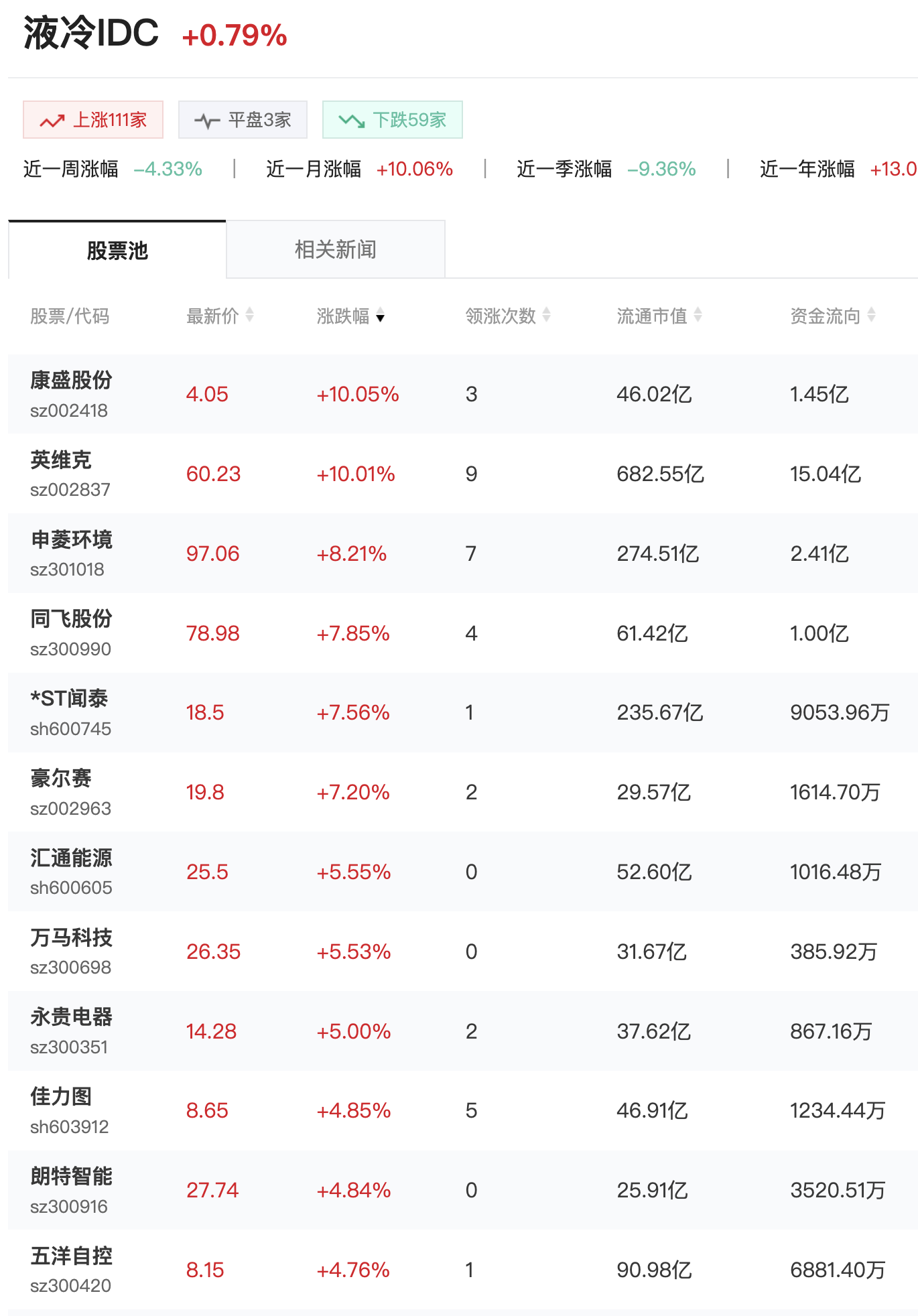 催化来自昨晚的一份半年报——8月24日晚间,液冷龙头英维克披露了2026年半年报,上半年营收30.17亿元,同比增长17.24%;二季度归母净利润环比暴增1934%。
B | AI太热了,不是比喻,是字面意思。 当英伟达最新AI服务器的冷却液温度可以飙到45摄氏度,比你家热水器的水温还高时,你就知道,散热这件事已经成了算力竞赛的“第二战场”。而A股的上市公司们,正闻风而动,掀起一场围绕液冷赛道的并购卡位战。 一根管道里的万亿生意 液冷是啥? 简单说,就是用水或特殊冷却液代替空气,把芯片的热量“搬”出去。传统数据中心靠风扇吹,跟夏天用电风扇一个道理——凉快是凉快,但芯片功率一上去就吹不动了。液体带走热量的能力是同体积空气的25倍,噪音还低25到30分贝。 目前最主流的方案叫“冷板式液冷”——把一块带微小通道的金属板贴在CPU/GPU上,冷却液流过板子,把热量带走。

C | 听着简单,但里面涉及微通道精密加工、密封防漏、材料兼容性等一系列高壁垒技术。 这生意有多大?中金公司研报测算,全球散热器件市场2025至2027年的复合年增长率达59.8%。

D | 申万宏源更激进,预计2026年液冷市场空间超千亿,2028年突破3000亿元。而TrendForce的数据显示,液冷在AI芯片中的渗透率将从2025年的33%跃升至2026年的53%,明年逼近60%。 一句话:风口来了。 上市公司液冷卡位战 最新的案例是远东股份。8月24日晚间,这家老牌线缆企业公告,子公司拟以2.16亿元收购富的旺旺80%股权,切入液冷散热核心部件领域。 远东股份的逻辑很清晰:公司已有算力芯片检测设备和全光互联业务,收购液冷资产,正好凑齐“供电—互联—散热”的AI基础设施闭环。这也是这一轮液冷并购潮的典型特征——产业补链型,在AI硬件产业链上找缺口,强化自身闭环能力。 这不是孤例。今年以来,20多家上市公司公告涉足液冷领域,从做瓶盖的金富科技到做模具的祥鑫科技,跨度之大,堪称“跨界奇观”。东吴证券研报指出,液冷正从“可选”走向“必选”,英伟达Rubin平台已全面导入无风扇全液冷架构,这一趋势不可逆。 警惕并购“双刃剑” 当然,跨界并购历来是双刃剑。远东股份这次收购的静态市盈率约19倍,增值率达303%,并将产生新的商誉。若标的公司未来业绩不达预期,商誉减值就是埋下的雷。 东吴证券在研报中也给出谨慎判断:英伟达链目前仍由Cooler Master、AVC等台系厂商把持高端份额,大陆企业多通过代工或二供切入,短期赚的是加工利润;而Google链和国内CSP链,国产厂商直供机会才更明确。 液冷蓝海确实广阔,但“跨界”的船票,未必都能驶向黄金彼岸。答案,终究要落到那些冷板、分水器和CDU的出货量里。(文章来源:财联社)。
Current article:http://ongns93.bomanglangsugangunxileba.cyou/4xb/20260826/96475.html
Published on:16:46:04


